


Water storage tanks serve various purposes, including maintaining water service pressure, providing emergency storage supply and pressure during power outages, and offering equalization volume to meet peak demands, such as fire flows and periods of high water usage throughout the day. Consistent flow rates are often preferred for wells, water treatment plants, and pump stations. Rather than adjusting treatment and pumping rates in real-time to meet instantaneous demands, equalization storage volume facilitates consistent operations by filling and draining storage volume to balance fluctuations.
When selecting a new water storage tank for your community or industry, several factors should be taken into consideration.
Traditionally, many water utilities have kept storage tanks full or nearly full to prepare for peak water use periods and emergencies like fires, resulting in storage facilities with greater capacity than necessary for non-emergency use. Additionally, some older storage facilities have overflow elevations lower than the system pressure, requiring pumps to transport water from the tank to the distribution system. Stagnant water in a tank can lead to water quality issues such as residual loss, thermal stratification in summer, and ice formation in winter due to long residence times.
Regardless of the tank facility type, it’s crucial to properly match the overflow elevation to the system pressure to allow the water surface within the tank to adjust according to system pressure. The water level in a storage tank typically fluctuates daily due to a fill-and-draw cycle, varying based on the storage facility’s size, real-time system demand, and distribution system location.
To ensure proper tank turnover and mixing, it’s essential for the water level in the tank to fluctuate several feet before the pump station begins operations or additional pumps are introduced.
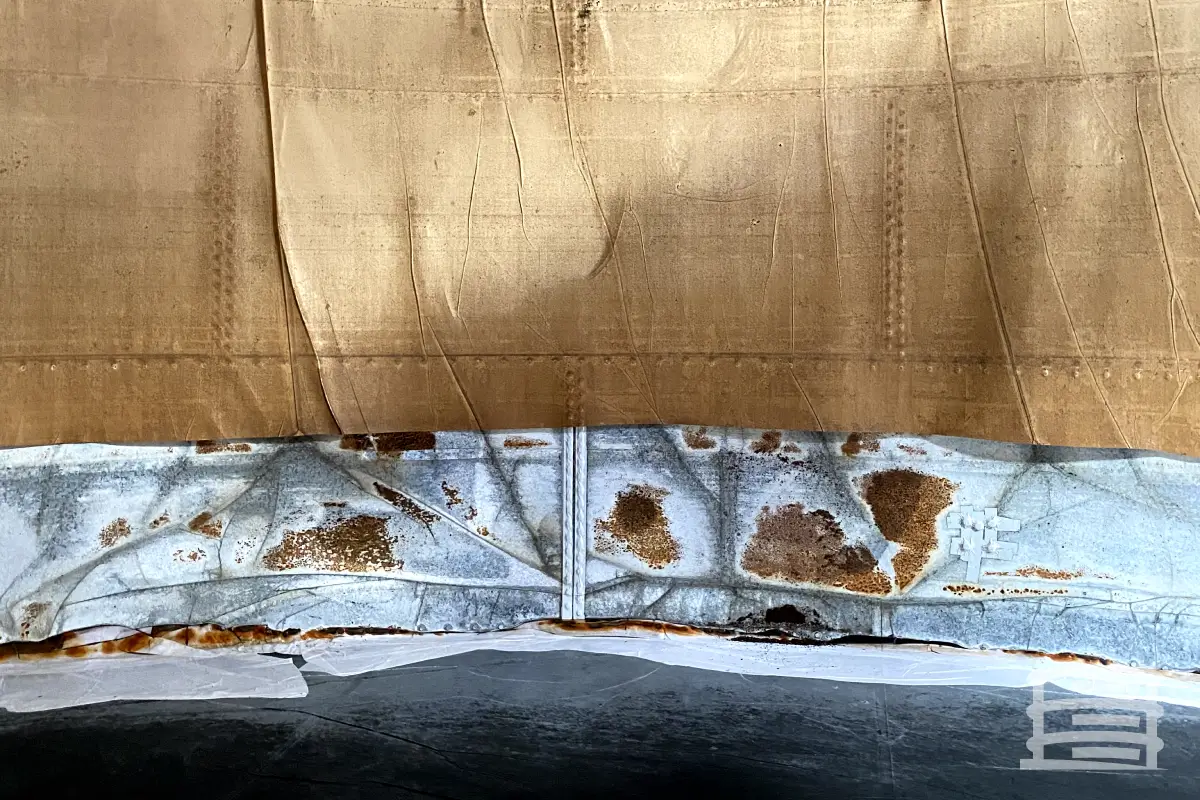
Corrosion represents one of the most significant financial challenges for industrial facilities nationwide. The costs associated with corrosion are substantial, amounting to hundreds of billions of dollars annually. However, there’s positive news: corrosion can be prevented through the implementation of established maintenance practices, such as the use of protective coatings.
Corrosion protection for storage tanks plays a vital role in preventing leaks, environmental disasters, fires, explosions, workplace injuries, unexpected downtime, and costly repairs. Selecting the most effective coatings and application techniques for your storage tank is one method of providing this protection.
Advantages of Tank Lining
Identifying the solution to any problem requires a comprehensive understanding of the issue and its origins. Corrosion, in its broadest sense, refers to the degradation of metals due to their reaction with the environment. When corrosion affects a storage tank, its contents—ranging from produce to potable water, chemicals, crude oil, clean petroleum products, and other substances—undergo a chemical reaction upon contact with the tank’s surface, leading to internal corrosion and rusting.
Tank lining serves as a solution not only to address existing corrosion but also to prevent its occurrence. This process involves applying coating products to the interior of storage tanks, commonly used to shield tanks from damage caused by corrosion and to preserve their structural integrity.
Protective linings not only maintain the operational efficiency of storage tanks but also significantly reduce overall maintenance costs and prolong the lifespan of storage solutions such as silos, bins, and containers. Additionally, most tank linings possess antifungal and antibacterial properties, which can inhibit the growth and spread of microorganisms, thereby preventing premature spoilage and associated health and safety risks.
Types of Linings for Storage Tanks
There are a number of available tank liners in the market. Here’s a breakdown of the common types and their strengths:
Epoxy
Epoxy tank coatings are composed of epoxy material known for its chemical resistance. These coatings are robust and aggressive, suitable for use in high-temperature environments. Given epoxy’s moisture resistance and lack of solvents, it is an ideal option for water tanks.
Epoxy linings come in three primary formulations: Epoxy Novolac, Bisphenol A, and Bisphenol F, each offering distinct advantages. Epoxy Novolac provides excellent chemical resistance, while Bisphenol F offers more versatile functionality, and Bisphenol A boasts higher viscosity and resistance to high temperatures. Epoxy Novolac is also solvent-free, making it particularly suitable for eco-friendly projects.
Polyurethane
Polyurethanes have been engineered to endure a broad spectrum of chemical and mechanical pressures, including abrasion, puncture, and corrosion. Their exceptional durability makes them highly effective in safeguarding against diverse elements, even in the most challenging environments. Particularly suited for concrete structures, polyurethanes offer flexibility while remaining robust, making them a versatile choice for various applications.
Fluoropolymers
Fluoropolymers possess a range of advantageous properties, including a low friction coefficient, high impact tolerance, good tensile strength, and exceptional resistance to corrosion, permeation, abrasion, and high temperatures. These qualities make them well-suited for lining storage tanks, as well as other components such as transport vessels and pipes.
Vinyl Ester
Vinyl ester liners, composed of vinyl, offer some of the highest levels of resistance to chemical infiltration and contamination. Due to their exceptional resistance to temperature and chemical damage, these liners are extensively utilized across various chemical industries.
Cementitious Liners
Cementitious linings are categorized into two main types: epoxy and polymer-modified cementitious linings. These materials find widespread use in lining concrete tanks employed for water treatment and chemical storage. They are particularly well-suited for waterproofing retaining or collection structures submerged underwater.

Zinc Tank Liners
A zinc tank liner, crafted from zinc silicate, boasts anti-corrosive properties. Its additives and binders have the capability to serve as an effective waterproofing material. With a high zinc dust content, these liners facilitate zinc-to-zinc contact, forming cathode-like protective layers akin to those observed in galvanizing. While these linings are non-porous, their cleaning process can prove challenging. Nonetheless, they remain capable of safely containing chemicals.
We offer tried and tested services in Crockett, Grapeland, Kennard, Latexo, Lovelady, Ratcliff, HOUSTON, TEXAS.
We also offer tried and tested services in Longbeach, and cities, towns, suburbs, localities, and places close to Long Beach such as Lakewood, Rossmoor, Lincoln Village, Seal Beach, Hawaiian Gardens, Los Alamitos, Cypress, Bellflower, Carson, La Palma, Paramount, Cerritos, East Compton, West Carson, Compton, Norwalk, Stanton, Westminster, Lomita, Downey, Lynwood, Rolling Hills Estates, Cudahy, CALIFORNIA.
Our friendly and experienced customer service team is here to help you!
Call Panel Tanks Vegas by American Tanks at +1 800 656 0167
Or email at info@paneltanks.vegas
1305 W 11th St #4087 Houston, TX 77008 USA
3711 Long Beach blvd Suite 4057 4th Floor # 1079 Long Beach, CA 90807 USA


